
What is Software Architecture?
Software architecture refers to the overall structure and design principles of a system. Just as buildings need blueprints, software needs systematic design.
Why Architecture Matters
Bad Architecture Results:
- Difficult to modify code (fixing one part breaks another)
- Impossible to add new features
- Endless bugs
- Difficult team collaboration
Good Architecture Benefits:
- Easy maintenance
- Scalable
- Easy to test
- Smooth team collaboration
Core Concept: Separation of Concerns
The most important principle is dividing each part to handle only one responsibility.
// Bad: Everything in one place
function processOrder(orderId) {
  const order = db.query("SELECT * FROM orders WHERE id = ?", orderId);
  const total = order.items.reduce((sum, item) => sum + item.price, 0);
  document.getElementById("total").innerText = total;
  sendEmail(order.customer.email, "Order Confirmation");
}

// Good: Separated by role
class OrderRepository {
  getOrder(orderId) {
    return db.query("SELECT * FROM orders WHERE id = ?", orderId);
  }
}

class OrderService {
  calculateTotal(order) {
    return order.items.reduce((sum, item) => sum + item.price, 0);
  }
}
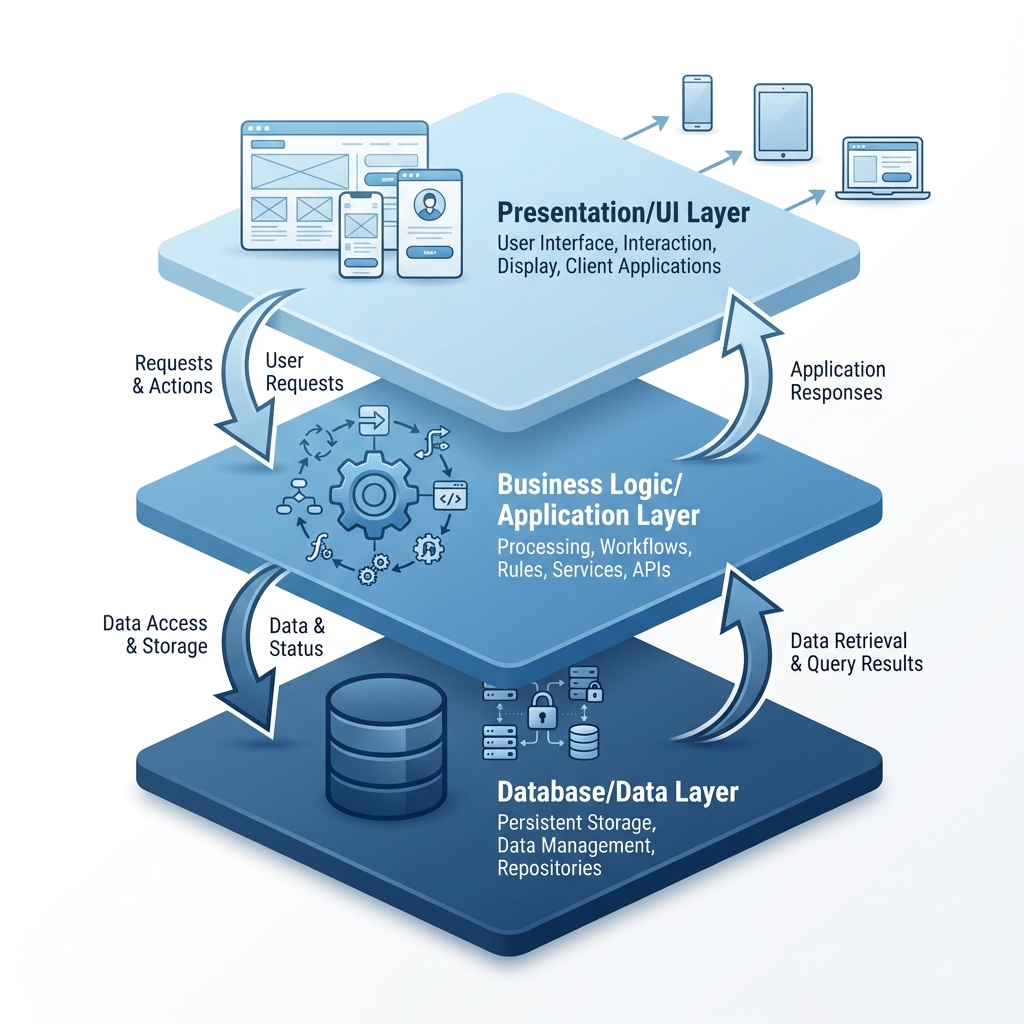
Layered Architecture
The most basic and widely used pattern.
3-Tier Architecture
1. Presentation Layer
- User Interface (UI)
- User input handling
- Data display
2. Business Logic Layer
- Core business rules
- Data processing and transformation
- Validation
3. Data Layer
- Database access
- External API calls
- File system access
MVC Pattern (Model-View-Controller)
Most commonly used pattern in web applications.
User → View → Controller → Model → Database
        ↑                     ↓
        └─────────────────────┘
Model: Data and business logic View: User interface Controller: Request handling and flow control
Microservices Architecture
Pattern of dividing large applications into small independent services.
Monolithic vs Microservices
Monolithic
┌─────────────────────────────┐
│   One Large Application     │
│  ┌─────┬─────┬─────┬─────┐ │
│  │User │Prod │Order│Pay  │ │
│  └─────┴─────┴─────┴─────┘ │
│    One Database             │
└─────────────────────────────┘
Microservices
┌────────┐  ┌────────┐  ┌────────┐  ┌────────┐
│User    │  │Product │  │Order   │  │Payment │
│Service │  │Service │  │Service │  │Service │
│  DB    │  │  DB    │  │  DB    │  │  DB    │
└────────┘  └────────┘  └────────┘  └────────┘
Design Patterns
Proven solutions to frequently occurring problems.
1. Singleton Pattern
class Database {
  static instance = null;

  static getInstance() {
    if (!Database.instance) {
      Database.instance = new Database();
    }
    return Database.instance;
  }
}
2. Factory Pattern
class UserFactory {
  createUser(type) {
    switch(type) {
      case 'admin': return new AdminUser();
      case 'customer': return new CustomerUser();
      default: return new GuestUser();
    }
  }
}
3. Observer Pattern
class EventEmitter {
  listeners = {};

  on(event, callback) {
    if (!this.listeners[event]) {
      this.listeners[event] = [];
    }
    this.listeners[event].push(callback);
  }

  emit(event, data) {
    if (this.listeners[event]) {
      this.listeners[event].forEach(cb => cb(data));
    }
  }
}
Learning Roadmap for Beginners
Stage 1: Basic Concepts (1-2 months)
- Separation of Concerns
- Layered Architecture
- MVC Pattern
Stage 2: Practical Application (3-4 months)
- Apply MVC to small projects
- Use Repository pattern
- Learn Dependency Injection
Stage 3: Advanced Patterns (5-6 months)
- Learn and apply Design Patterns
- Understand Clean Architecture
- Learn SOLID principles
Stage 4: Large-Scale Systems (6+ months)
- Microservices Architecture
- Event-Driven Architecture
- CQRS, Event Sourcing
Architecture Selection Guide
| Project Scale | Recommended Architecture |
|---|---|
| Small (1-2 people) | Simple Layered or MVC |
| Medium (3-10 people) | Clean Architecture |
| Large (10+ people) | Consider Microservices |
Software architecture cannot be perfectly designed at once. It must be continuously improved as the project grows.
Core Principles:
- Separate concerns
- Manage dependencies
If you're a beginner, start with layered architecture and MVC pattern. As you gain experience applying them to small projects, you'll naturally understand and apply more complex patterns.