
Measuring and Understanding Vehicle Fuel Economy
Accurately tracking your vehicle's fuel efficiency is essential for managing maintenance and fuel costs.
1. Global Fuel Economy Units
| Unit | Region | Interpretation |
|---|---|---|
| km/L | Korea, Japan | Distance per liter (Higher is better) |
| MPG | US, UK | Miles per gallon (Higher is better) |
| L/100km | Europe, Canada | Liters needed for 100km (Lower is better) |
2. Real-World Measurement: Full-to-Full Method
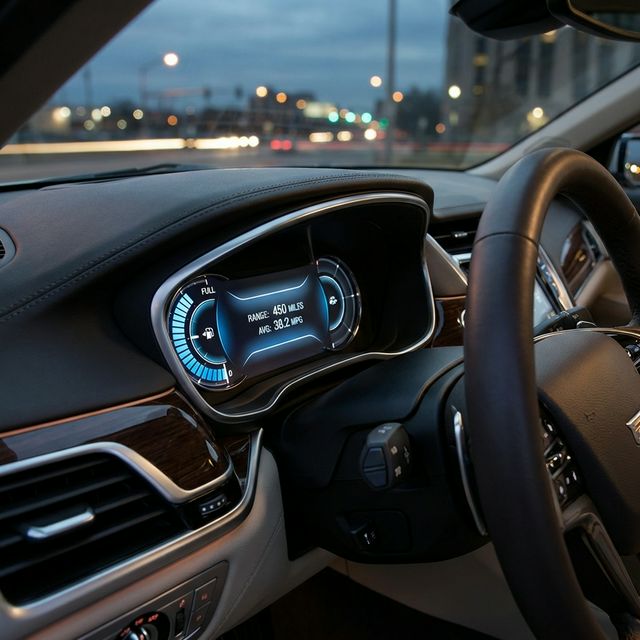
This is more accurate than your dashboard's trip computer.
- Fill up your tank to 'Full' and record the mileage (or reset Trip A).
- Drive for several days as usual.
- Fill up to 'Full' again and note the liters (L) added.
- Formula: (Distance Driven [km]) ÷ (Fuel Added [L]) = Real Fuel Economy [km/L]
3. Diesel vs. Gasoline: Why the Efficiency Gap?
Generally, diesel engines are more fuel-efficient than gasoline engines for two main reasons:
- Higher Thermal Efficiency: Diesel engines operate with a much higher compression ratio. Higher compression means more of the fuel's energy is converted into mechanical work rather than waste heat.
- Fuel Energy Density: Diesel fuel is denser and contains more carbon atoms than gasoline. Consequently, a liter of diesel provides about 12% more energy than a liter of gasoline.
In most cases, a diesel-powered vehicle can travel 20–30% further than an equivalent gasoline model.
4. Tips to Improve Efficiency (Eco-Driving)
- Avoid Rapid Acceleration: Sudden throttle usage spikes fuel consumption.
- Coast to Stop (Fuel-Cut): Lift off the accelerator earlier when approaching a stop to cut fuel injection while maintaining momentum.
- Check Tire Pressure: Under-inflated tires increase rolling resistance and lower efficiency.
- Remove Excess Weight: Every extra kg requires more energy to move.
4. Rated vs. Real Economy
Manufacturer-rated economy is measured in ideal lab conditions. In real-world traffic, expect levels 10–20% lower than the official rating.